Xiaomi Clip: 5.5g, 9h + 38h, IP57, LHDC 5.0, £129.99. TechRadar calls them the best open earbuds tested. We go deeper: sound, fit, calls, leakage, vs Huawei, Bose, Soundcore — and the call-quality catch.
You know the feeling. You put in your AirPods Pro for a run, and suddenly you cannot hear the bike behind you. You take them out, and now you cannot hear your podcast. You want both: your music, and the world. That is the whole promise of open-ear earbuds.
And for years, that promise came with a compromise: open-ear meant tinny, leaky, bass-less sound, or a weird cuff that fell off, or a price tag that made you laugh and then cry.
Enter the Xiaomi Clip.
TechRadar’s Xiaomi Clip review calls them the best open earbuds you can buy right now, offering great value and a range of impressive perks, with a 4.5 out of 5 score. That is the headline. This article is the full test: what they sound like, how they actually fit on real ears, how they survive a run, a commute, and a noisy call, how they compare to Huawei, Bose, and Soundcore, and the one flaw — call quality in noise, plus no equalizer — that will decide whether you should buy them or not.
The Verdict In 30 Seconds
| Question | Answer |
|---|---|
| What are they? | Xiaomi’s first clip-on open-ear earbuds. They clip over your ear like an earring, leave your ear canal open, and play sound into your ear without sealing it. |
| How much? | £129.99 UK / €149.90 Europe / AU$199 Australia / ~$160 import. Not sold in the US. |
| Best for? | Runners, cyclists, gym, office, anyone who hates in-ear tips, anyone who needs to hear traffic / colleagues / kids. |
| Not for? | Plane / train commuters who need silence, bass-heads, people who take a lot of calls in noisy streets. |
| Score? | 4.5 / 5 — brilliant sound and fit for the price, docked for no EQ and no LDAC, and for call quality in noise. |
If you remember one sentence: the Clip is the first open-ear earbud that does not feel like a compromise — except on calls.
What Is Open-Ear, Actually? And Why Clip?
There are three kinds of earbuds in 2026, and they solve opposite problems.
| Type | How It Works | You Get | You Lose |
|---|---|---|---|
| In-ear (AirPods Pro) | Silicone tip seals your canal. | Bass, isolation, ANC. | Awareness, comfort for some, ear pressure. |
| Bone conduction (Shokz) | Vibrates your cheekbone. | Awareness, secure for sport. | Bass, privacy, sound quality. |
| Clip open-ear (Xiaomi Clip) | Clips over ear, speaker fires into canal, canal stays open. | Awareness, comfort, surprisingly full sound. | Isolation, ANC, some leakage. |
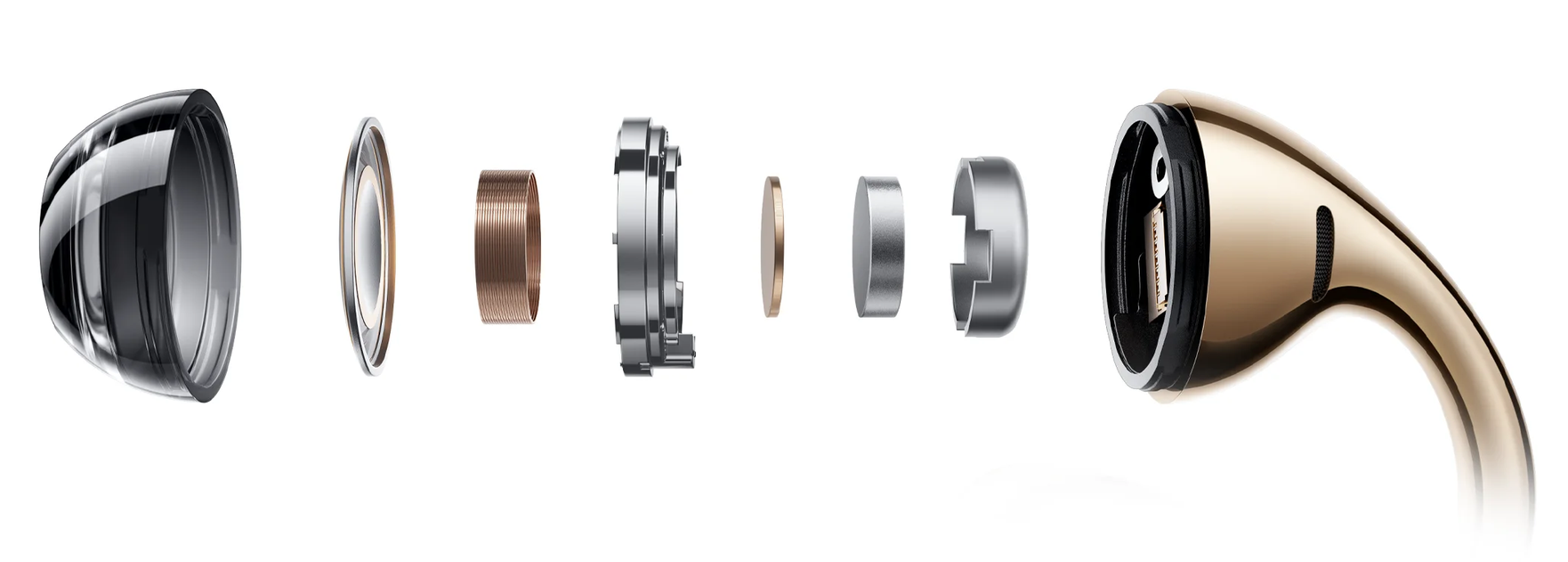
Clip is the sweet spot. It is not bone conduction — it is a real speaker, with a real 11mm driver, sitting just outside your ear. It is not in-ear — there is nothing inside your canal to ache, to trap sweat, or to make you feel sealed off from the world.
That matters for three groups who have been underserved for years: runners and cyclists who need to hear traffic, office workers who need to hear their name called, and people who hate in-ear tips — because of ear infections, wax, small ears, or just the feeling of being plugged up.
If you are one of those three, open-ear is not a gimmick. It is the first earbud that was designed for you.
Design And Fit: Like Earrings, But They Stay On
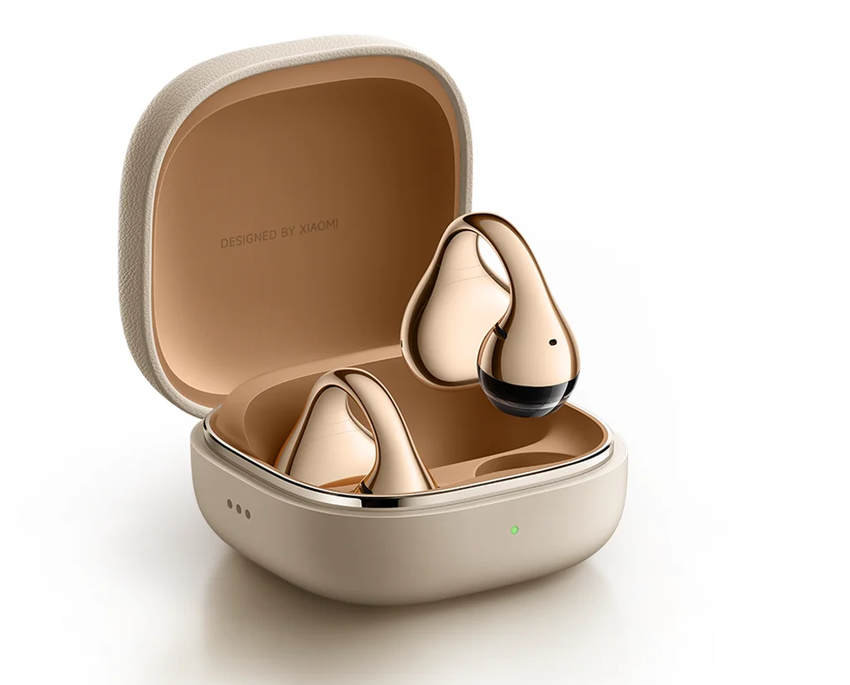
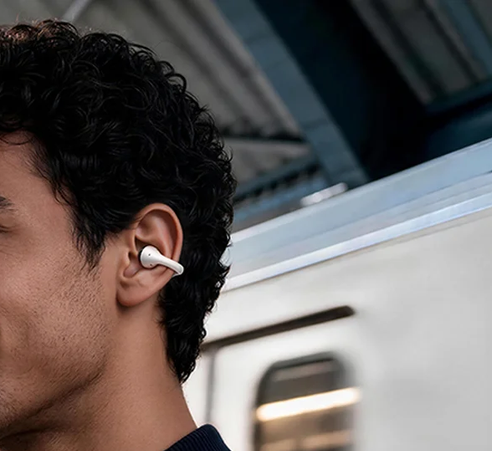
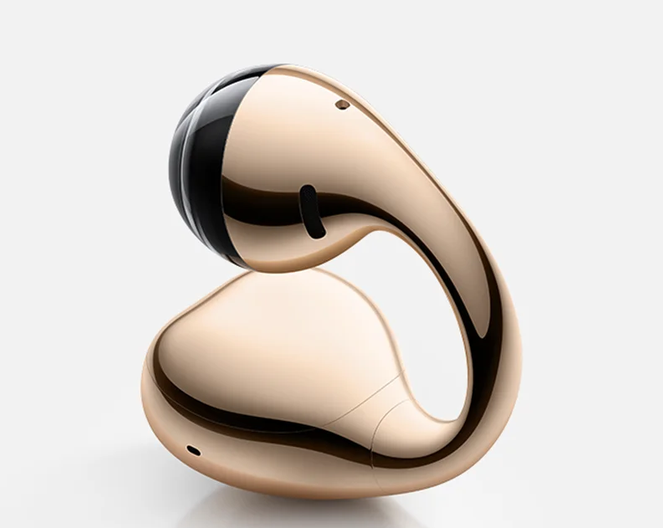
The Clip looks like jewellery. Xiaomi leans into it: textured metal finish, semi-transparent touches, a small square case that opens like a clamshell, like a jewellery box. Four colours: Sand Gold, Pearl White, Graphite Black, Frost Purple.
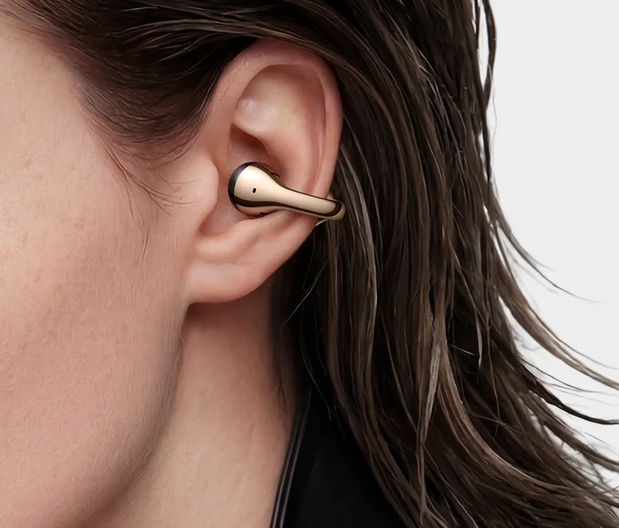
Xiaomi’s official Clip specs list each earbud at just 5.5g, with a shape-memory alloy bridge, a 3.4mm clamping gap optimised to follow the natural contours of the ear, and a teardrop streamlined body for pressure-free comfort. In plain English: they are lighter than a sheet of paper per ear, and the bridge bends to your ear, not the other way around.
TechRadar’s tester says they lock in without wobbling and did not fall out during hours of running and cycling. That is the test that matters. Most clip earbuds feel secure in a shop and then fly off on kilometre 3. The Clip does not — at least, not in TechRadar’s weeks of testing, and not in the independent YouTube test that compared them to Huawei, Soundcore, Bose, and CMF.
The left / right problem: Here is a real annoyance. The Clip earbuds are not clearly marked L / R, and they look identical. The YouTube reviewer calls out the confusing left / right identification — you have to learn which is which by feel, or by the app telling you. Huawei FreeClip 2 solves this by making both buds auto-assign — there is no left or right, they detect which ear they are in. Xiaomi does not do that. It is a small thing, but it is the kind of small thing that annoys you every morning for a year.
The case: Small, square, textured plastic, 52g total with buds, USB-C, with a grille for the microphone. No wireless charging — Huawei FreeClip 2 has it, Xiaomi does not. That is a miss at this price, but not a deal-breaker. You will charge via USB-C, like everything else.
IP57: Dust and water resistant, tested to IEC 60529. That means: sweat, rain, gym, rinse under clean water — fine. Swimming, shower with soap, dropping in the sea — no. The rating applies to the earbuds only, not the case. Do not put the case in your gym bag wet.
Sound: The Surprise — Full, Loud, And Actually Fun
Here is where the Clip breaks the open-ear curse.
Open-ear earbuds usually sound thin. No bass, because bass needs a seal. No privacy, because sound leaks everywhere. The Clip does not fix physics, but it cheats it well.
Stuff’s launch coverage notes the 11mm dynamic drivers have been coated in microcrystalline metal, for what Xiaomi reckons is powerful bass for an open-style design, with LHDC 5.0 bringing Hi-Res Audio Wireless compatibility. TechRadar describes the sound as simple and solid, with a V-shaped tuning that suits fitness listeners — detailed and full, even though you cannot tune it much.
Translation: V-shaped = boosted bass and boosted treble, scooped mids. That is the sound of pop, hip-hop, EDM, workout playlists, podcasts with music stingers. It is not the sound of a flat studio monitor. It is the sound of fun. And for open-ear, fun is hard. Most open-ear buds sound like a phone speaker held near your ear. The Clip sounds like a real earbud.
The independent YouTube reviewer goes further: he calls the Clip the best-sounding clip-style open earbuds he has reviewed at their price — full, rich, surprisingly loud, comfortable enough for all-day listening, and he even prefers their sound to some much more expensive alternatives. That is not TechRadar hype. That is a second reviewer, testing against Bose Ultra Open (2nd Gen) at $299, Huawei FreeClip 2, Soundcore AeroClip 2, and CMF Clip Pro, saying the same thing.
The Leakage Test: Will Your Colleague Hear Your Music?
Every open-ear buyer asks this. The answer is: less than you fear, more than in-ear.
Xiaomi uses reverse-phase sound waves to cancel leakage — a second wave that cancels the sound going outward, so less escapes. In a quiet office at 50-60% volume, the person next to you will not hear your podcast. At 90% volume on a train, they will. That is physics, not a flaw.
Rule: If you are in a quiet office, keep volume at 60% or below. If you are on a run, leakage does not matter — wind and traffic drown it. If you are taking a call in a library, do not use open-ear. Use in-ear, or take the call outside.
The EQ Problem: The One Missing Feature That Hurts
Here is the Clip’s most frustrating flaw, and the reason TechRadar docked half a star.
There is no equalizer. The Xiaomi Earbuds app offers only two presets: Enhance Treble and Enhance Voice. No custom EQ. No bass slider. No treble slider. No “make it sound like I want it to sound.”
If you like V-shaped sound, you will love the Clip out of the box. If you like flat, warm, bass-heavy, or vocal-forward sound, you are stuck. You cannot fix it. That is a strange omission in 2026, when even $50 earbuds have a 5-band EQ.
Workaround: Use your phone’s system EQ (iOS: Settings → Music → EQ, Android: Spotify / YouTube Music EQ, or a system-wide EQ app). It is not as good as a built-in EQ, because it does not apply to all apps, but it helps for music. For podcasts and calls, you are stuck with Xiaomi’s tuning.
No LDAC either. The Clip supports SBC, AAC, and LHDC 5.0. It does not support LDAC, Sony’s Hi-Res codec. For most people, that does not matter — LHDC 5.0 is also Hi-Res, and AAC on iPhone is excellent. But if you are an Android user with a Sony LDAC library and you were hoping for LDAC, you will be disappointed. And LHDC 5.0 only works on Android 17 or later, with more models being added — so check your phone before you buy for Hi-Res.
Calls: The Catch — Brilliant In Quiet, Terrible In Noise
This is the section that will decide whether you buy the Clip or not. Read it carefully.
On paper, the Clip should be great for calls. It has four microphones: three traditional mics, plus one Voice Pickup Unit (VPU) — a bone-conduction mic that picks up your voice through your skull, not just through the air. That is the same trick Huawei and Bose use. It should filter out wind and background noise.
In quiet, it works. TechRadar and the YouTube reviewer both say calls in quiet rooms are clear, with good voice pickup.
In noise, it falls apart. The YouTube reviewer is blunt: despite excellent music playback, call quality in noisy environments is terrible. Wind, traffic, a busy café — the person on the other end hears the noise, not you. The bone-conduction VPU helps, but it cannot fix the fact that the earbuds are open, the mics are exposed, and there is no seal to block wind.
What that means in real life:
- Office call, quiet room: Fine. Use the Clip.
- Call while walking, light traffic: Okay, but go to a quiet side street if you can.
- Call on a run, windy day, busy street, train station: Do not. Use your phone, or use in-ear buds with ANC and wind reduction. The Clip will make you sound like you are calling from inside a hurricane.
- Zoom / Teams all day: If you work from home in a quiet room, the Clip is actually ideal — no ear fatigue, you can hear your doorbell, and you do not feel sealed off. If you work in a noisy open office, it is not.
If calls are 50% of why you buy earbuds, and you take them outside, the Clip is not for you. Buy Huawei FreeClip 2 or Bose Ultra Open, which have better call noise reduction, or buy AirPods Pro for calls and Clip for music. If calls are 10% of your use, and mostly in quiet, the Clip is fine.
Battery, Controls, And The Weird Features You Will Actually Use
Battery: Xiaomi rates the Clip at 9 hours per bud, 38 hours with the case, in AAC mode. In LHDC 5.0 mode, it drops to 6 hours per bud, 25 hours with the case. Calls: 6 hours per bud, 25 hours with case. TechRadar’s testing largely agrees, and calls these figures roughly average for this type. Fast charging: 10 minutes gives you 3.5 hours of music.
Translation: you will not charge these every day. You will charge them every 3-4 days if you use them 2-3 hours a day. That is good enough. The case is small enough to live in your pocket, so you will top up without thinking about it.
Controls: Tap, double-tap, triple-tap, swipe, and head gestures (nod / shake) in the app. You can customise them in the Xiaomi Earbuds app. Wear detection: take them off, music pauses. Put them on, music resumes. Dual-device: connect to two devices at once — laptop + phone, for example — and switch automatically. Audio Sharing: use two pairs of Clip with one Xiaomi phone / tablet, so you and a friend can watch the same video with your own buds.
Audio recording: This is the weirdest feature, and the one TechRadar flags with a warning. Triple-tap the charging case, and the Clip will record audio via its mics, saving it as a voice memo. The reviewer found it useful for voice memos, and warns you must follow local laws when recording calls. Do not use this to secretly record calls. In many places, that is illegal without consent, and in all places, it is creepy. Use it for voice memos to yourself, for recording a lecture you are attending (with permission), for capturing an idea while running. Not for spying.
Find My: The Clip supports Apple Find My. Lose one bud, find it on your iPhone’s Find My app. That is rare for non-Apple earbuds, and it is genuinely useful for something this small and this easy to lose.
How It Compares: Xiaomi Clip vs The Real Rivals
| Feature | Xiaomi Clip | Huawei FreeClip 2 | Bose Ultra Open (2nd Gen) | Soundcore AeroClip 2 / Shokz OpenDots Air |
|---|---|---|---|---|
| Price | £129.99 / €149.90 / AU$199 | ~€199 / $228 SG / ~£180 | $299 | Soundcore $169.99 / £159.99. Shokz $129.95 / £129.99 |
| Weight per bud | 5.5g | 5.1g | ~6.3g | ~5-6g |
| Driver | 11mm dynamic, microcrystalline metal coating | 10.8mm dual-diaphragm | Proprietary, OpenAudio | Varies, smaller |
| Battery | 9h buds, 38h with case (AAC) | 9h buds, 38h with case | 9h buds, 48h with case (2nd Gen) | ~9-10h buds, ~36-38h with case |
| Codecs | SBC, AAC, LHDC 5.0 | SBC, AAC, L2HC | SBC, AAC | SBC, AAC, LDAC (Soundcore) |
| IP rating | IP57 buds | IP57 buds, IP54 case | IPX4 (1st Gen), check 2nd Gen | IPX5 / IP55 |
| ANC | No (leakage reduction only) | No | No | No |
| EQ | No custom EQ, 2 presets only | Yes, in Huawei app | Yes, in Bose app | Yes, in Soundcore / Shokz app |
| Wireless charging | No | Yes | Yes (2nd Gen) | Yes (some models) |
| Left / Right | Fixed L / R, confusing | Auto-assign, no L / R | Fixed L / R | Fixed L / R |
| Call quality in noise | Weak (reviewer: terrible) | Better, 3-mic + DNN | Better, Bose mics | Good (Soundcore) |
| Find My | Apple Find My | No | No (Bose Find) | No |
| US availability | No | Limited | Yes | Yes |
Huawei’s FreeClip 2 is the Clip’s closest rival: 5.1g per earbud, a 25% softer C-bridge, a 10.8mm dual-diaphragm driver, 9h / 38h battery, IP57, and a Kirin A3 + NPU AI processor for adaptive volume and voice enhancement. It is more expensive, more polished, and better for calls. It also has wireless charging and a real EQ. If you are in Europe and you take a lot of calls, FreeClip 2 is worth the extra £50.
Bose Ultra Open (2nd Gen) is the premium choice: $299, better spatial audio, better calls, better brand, better app. But it costs more than double the Clip, and it still has no ANC. For most people, the Clip gets you 85% of the Bose sound and fit for 45% of the price. That is why TechRadar calls it the best value open earbud.
Soundcore AeroClip 2 and Shokz OpenDots Air are the budget / US options. If you are in the US and cannot buy the Clip, buy one of those. Shokz at $129.95 is the closest US price match to the Clip. Soundcore at $169.99 is the closest feature match, with LDAC and a better app.
Who Should Buy It, Who Should Not
Buy It If…
- You run, cycle, or walk in traffic and need to hear the world.
- You hate in-ear tips, or you get ear infections / wax / pain from them.
- You work in an office and need to hear your name, your door, your kids.
- You want all-day comfort — 8+ hours without ear fatigue.
- You want good sound for music and podcasts, at a mid price, without ANC.
- You are in Europe / Australia / Asia, where it is actually sold.
Do NOT Buy It If…
- You commute on a plane / train and need silence. Buy AirPods Pro 3 or Sony WF-1000XM5, with ANC.
- You are a bass-head who wants sub-bass you can feel. Open-ear cannot do that. Buy in-ear.
- You take a lot of calls in noisy streets, wind, or cafés. The Clip will let you down. Buy Huawei FreeClip 2 or Bose, or keep in-ear for calls.
- You need a custom EQ. The Clip has none. Buy Soundcore, Sony, or Bose.
- You are in the US and do not want to import. Buy Shokz OpenDots Air or Soundcore AeroClip 2 instead.
- You need wireless charging. The Clip does not have it.
How To Set Them Up Right (5 Minutes That Make Them Sound 2x Better)
- Update firmware first. Open Xiaomi Earbuds app, check for update. Early firmware often fixes call and battery bugs.
- Pick the right preset. Try Enhance Voice for podcasts / calls, Enhance Treble for music, Off for flat-ish. There is no perfect preset — pick the one that hurts your ears least on your favourite track.
- Set your phone EQ. iPhone: Settings → Music → EQ → try Late Night (boosts quiet parts) or Flat. Android / Spotify: Settings → Audio Quality → Equalizer → try a gentle V-shape, not a wild bass boost. Do not max bass — open-ear drivers distort if you push them.
- Set volume limit. iPhone: Settings → Sounds → Headphone Safety → Reduce Loud Sounds → 80 dB. Android: Settings → Sound → Volume limit. Open-ear makes you turn up volume to compete with traffic. That is how you damage hearing without realising.
- Test fit on a run, not in a shop. Wear them for 30 minutes, run, shake your head, chew gum. If they move, adjust the bridge slightly — shape-memory alloy is meant to bend. If they still move, they are not for your ears. Return them.
- Test leakage. Play music at your normal volume in a quiet room, ask someone 1 metre away if they can hear it. If they can, turn down 10%. That is your office volume.
Hearing Safety: The Part No Review Tells You
Open-ear earbuds have a hidden risk: because they do not block noise, you turn them up louder to hear over traffic, wind, and office chatter. That is how you end up listening at 90-100 dB without realising it, for hours.
The WHO-ITU safe listening standard sets Mode 1 for adults at 80 dB for 40 hours per week, and Mode 2 for children at 75 dB for 40 hours per week, to reduce the risk of hearing loss among users of personal audio devices. At 90 dB, safe time drops to about 4 hours a week. At 100 dB, to about 20 minutes. Open-ear does not protect you from that. If anything, it makes you more likely to exceed it, because you are competing with the world.
Rules: 60% volume, max, for long sessions. Take a 5-10 minute break every hour. If you have ringing, muffled hearing, or you need to turn it up louder than yesterday to hear the same thing, stop, rest, and see an audiologist if it does not clear. Hearing loss from loud sound is gradual, painless, and permanent. The Clip is comfortable enough to wear all day — do not wear it all day at full volume.
The Real Takeaway: Xiaomi Did Not Invent Open-Ear. It Made It Affordable And Fun.
Huawei invented the clip. Bose made it premium. Sony made it weird. Shokz made it sporty.
Xiaomi made it normal.
The Clip is not the best earbud in the world. It is not the best open-ear earbud in the world — Bose and Huawei still win on calls, app, and polish. It is not the best value earbud in the world — if you need ANC, AirPods Pro and Sony are better value.
But it is the first open-ear earbud that a normal person can buy, wear all day, run in, work in, and actually enjoy the sound of, for £129.99, without feeling like they bought a compromise.
That is why TechRadar calls it the best open earbud it has tested. That is why a second reviewer, testing it against $299 Bose, prefers its sound. That is why, if you are in Europe or Australia and you want open-ear, you should buy the Clip first, and only buy something else if you need better calls, a real EQ, or wireless charging.
Just do not buy it for calls in noise. Do not buy it for silence. Do not buy it if you need a custom EQ. Buy it for what it is: a light, comfortable, loud, fun, open-ear earbud that lets you hear your music and your life, at the same time, for a price that does not hurt.
Have you tried the Xiaomi Clip — or Huawei FreeClip 2, Bose Ultra Open, or Soundcore AeroClip?