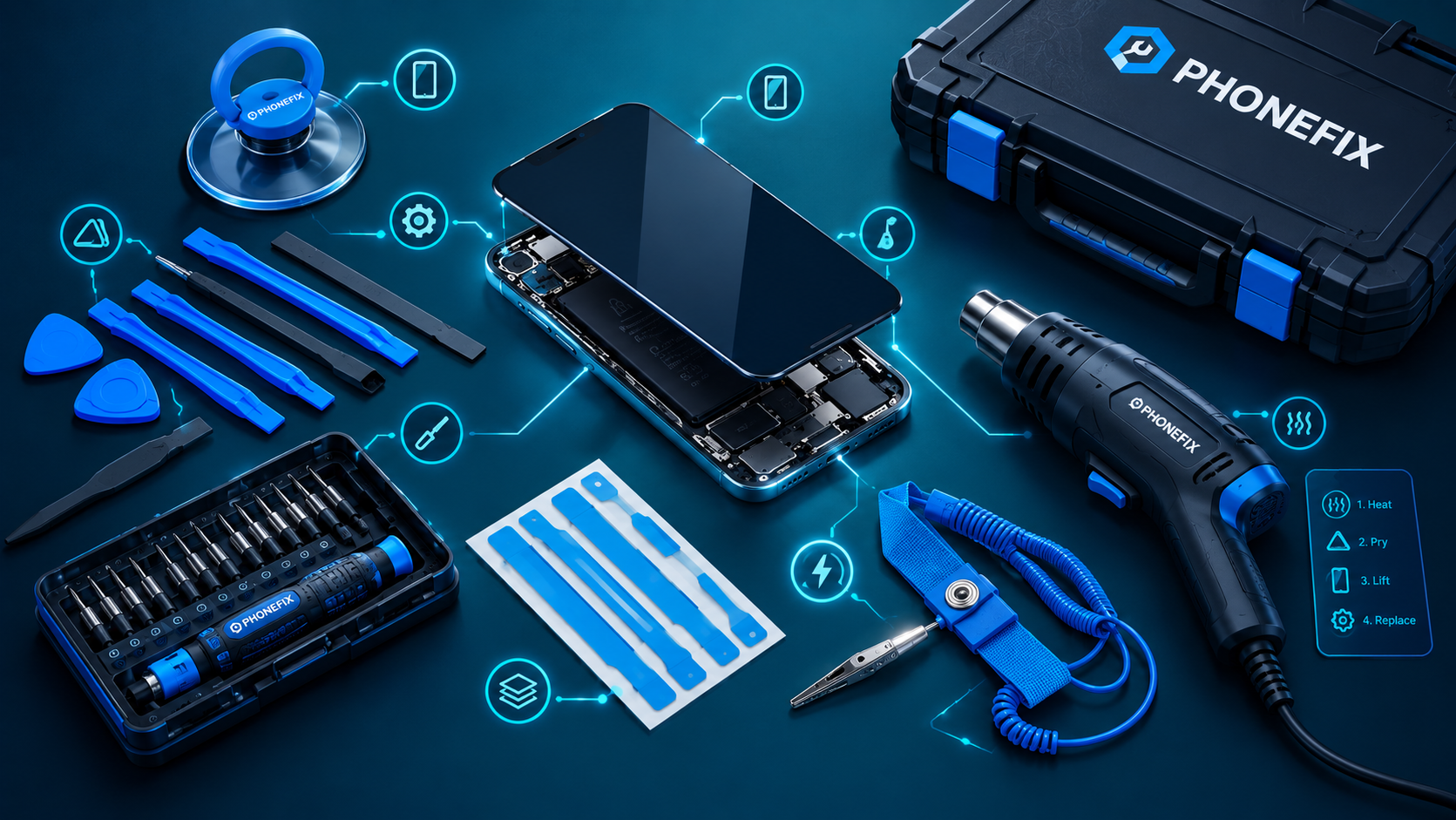
The single top reason for bringing a phone in for repair is a broken screen. When repairing that screen, if the wrong tools are not at hand, you simply cannot do this correctly without damaging the frame or the internals.
Typically, those unskilled techs will scratch the bezel of the display, break a ribbon cable, or cause a gap that allows dust and moisture to get in. The proper tools will avoid these pitfalls and make cell phone screen repair a rapid, well-understood affair rather than a stressful guesswork exercise.
Why the Right Toolkit Matters More Than Ever
The tolerances required in modern phones are smaller than what they were only a few years ago. Adhesive seals are now engineered to create water-resistant barriers; many have curved edges to stop any water from slipping through the sides, and beam-positioned parts in the mold are closer together than ever before. The use of a tool other than the correct type of / thickness screwdriver can result in damage that is many times the value of the tool.
One of the reasons why Phone Screen Repair Kits include a variety of tools instead of one one-size-fits-all for the job is the precision required for the job. There is a difference between the different phone models, and a kit that provides versatility will save a technician from improvisation.
The Core Tools Every Kit Needs
Opening and Disassembly Tools
- Adjustable cup for lifting the screen from the frame
- Use plastic pry tools and spudgers to prevent damage to internal parts
- Thin plastic cards or picks for breaking through adhesive seals that go on a guitar.
- Electrostatic force assistants for small screws and connectors
Screwdriver Sets
- The various screw types adhered to the iPhone cases. Most of the modern iPhone models came equipped with screwdrivers of various types attached as cases.
- Phillips and Torx bits for Android phones and home brackets
- The near-complete selection of tri-point screwdrivers designed for battery connector screws on some models
Heating and Adhesive Tools
- Use a heat gun/ hot air station to melt the glue without overheating the display.
- Pre-cut strips of adhesive that correspond to specific phone types.
- Isopropyl alcohol to clean any excess adhesive before fitting.
Recommended Tool Kit Breakdown
| Tool Type | Purpose | Skill Level Needed |
|---|---|---|
| Suction cup and pry tools | Safely separate screen from frame | Beginner |
| Precision screwdriver set | Remove model-specific screws | Beginner |
| Heat gun or heating pad | Soften adhesive for clean removal | Intermediate |
| Anti-static wrist strap | Protect internal chips from static damage | Beginner |
| Digitizer testing tool | Confirm touch function before final reassembly | Intermediate |
| Frame straightening tool | Fix minor bends after drop damage | Advanced |
Step-by-Step Approach to a Clean Screen Repair
Switching off the device before starting helps to avoid having short circuits while taking it apart. Once there, the outer screws can be unscrewed, and a suction cup can be used to carefully lift the display up to gain access to the battery connector; it is recommended to disconnect the battery connector to minimize risk during subsequent repair work.
After the old screen has been removed, the old adhesive residue from the removal of the old Phosphene Screen is buffed away, leaving a smooth surface for the inner parts of the new Screen to rest flat. Before you put the adhesive seals in place, you can test the impact of the new screen and its screen quality before you reassemble the entire phone.
Common Mistakes to Avoid
- Not removing the display after disconnecting the battery
- Working around the logic board with metal tools rather than plastic tools.
- Too much heat, which will warp the frame or damage the battery.
- Avoiding pre-reassembly and resulting in a rebuild that will be broken again
- Using an old but not fresh adhesive applied through the proper cut strip.
Building a Kit That Scales With Demand
A small repair shop that services repairs occasionally can begin with a small set of basic tools. If the volume of repairs increases, it becomes important to use these specialized tools, such as a frame straightening press or a dedicated digitizer tester, because these instruments pay for themselves with only a few repairs.
To ensure that the kit is never neglected with inferior components and is cost-effective would be to purchase individual replacement tools as they become used up.
Storing and Maintaining a Repair Toolkit
If the necessary tools are maintained properly between jobs, they will last for a longer time. Organizing the bits by size on screwdrivers helps avoid the common screwdrivers and stripping heads and wipes tools clean of screwdriver bit residue after use to avoid the build-up of adhesive residue that diminishes grip over time on pry tools.
A special case with compartments also makes all subsequent repairs quick and easy, as they can use their time more effectively on the actual work and less on looking for what they need. This little bit will noticeably speed up the turnaround of any screen repair in the shop during the months of its regular use.
Frequently Asked Questions
What tools are essential for a basic phone screen repair kit?
A basic kit needs a suction cup, plastic pry tools, a precision screwdriver set, and anti-static tweezers to safely open and reassemble most phones.
Do I need a heat gun for every screen repair?
Not always, but a heat gun becomes necessary for models with strong adhesive seals, particularly water-resistant flagship phones.
How do I know if a screen repair kit fits my phone model?
Check the kit’s listed compatibility for exact model numbers, since screw types and adhesive shapes vary significantly between phone generations.
What is the biggest mistake beginners make during screen repair?
Forgetting to disconnect the battery before working near the display connector is the most common and most damaging beginner mistake.
Can I upgrade my toolkit gradually instead of buying everything at once?
Yes, starting with core opening and screwdriver tools and adding specialized equipment as repair volume increases is a practical, cost-effective approach.
Conclusion
With the right collection of tools at your fingertips, phone screen repair becomes a repeatable process, instead of a hunch-filled gamble. Carm Worthy, a technician with a vested interest in good opening tools, the appropriate screwdrivers, and a good heating tool, always has a cleaner finish and has shown fewer callbacks.
As phone designs evolve and become slimmer and feature more waterproofing seals, the distance between the competent technician and the less-prepared technician grows wider at all times. Reliable Phone Screen Repair Kits now serve to safeguard repair quality and the trust of customers in the future.
Whether you’re struggling to get a job done with one phone or managing a full-fledged repair shop, the tools you have in your arsenal always form the basis of your successful operation.