Some casino games feel slow and predictable. You spin, wait, lose, repeat. After a while, the excitement disappears completely.
Chicken Road works differently.
The game moves fast. Really fast. Every round creates tension almost immediately because players constantly face one question:
“Cash out now or risk losing everything?”
That simple decision is probably the biggest reason people keep coming back.
Chicken Road app belongs to the growing category of crash-style casino games, where timing matters more than traditional slot mechanics. And honestly, these games trigger a very different psychological response compared to older online casino formats.
So yes, for some players, Chicken Road can absolutely feel addictive.
But the reasons are more interesting than many people realize.
Why Chicken Road Feels Different
The game itself looks simple at first.
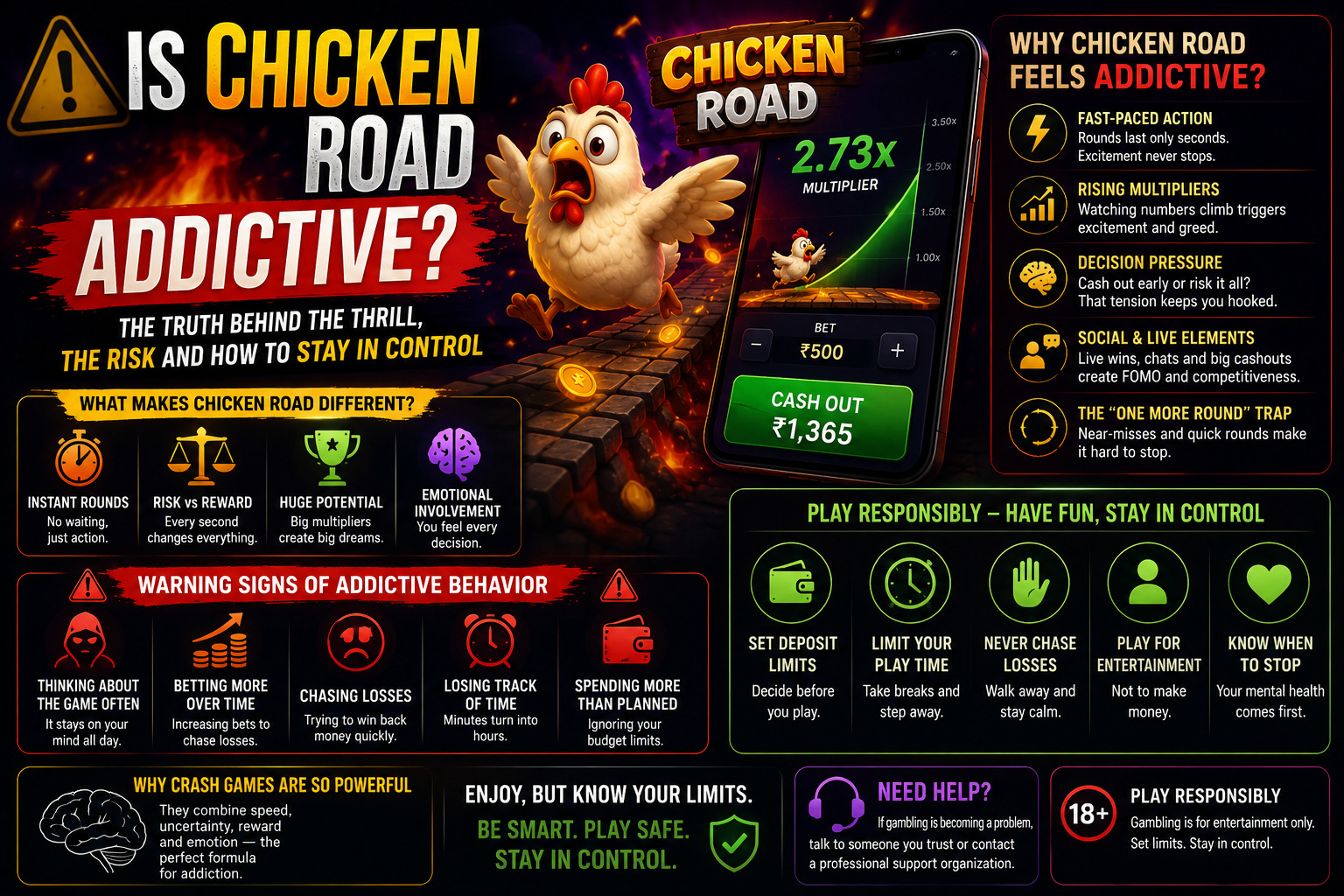
A chicken keeps moving forward while multipliers rise higher and higher. Players must decide when to cash out before the round crashes.
That’s basically the entire concept.
Yet somehow it creates huge tension every few seconds.
The reason is uncertainty.
Players constantly feel trapped between:
- greed
- fear
- excitement
- regret
Cash out early and you feel safe but disappointed.
Wait too long and you lose everything instantly.
That emotional cycle repeats continuously.
And because rounds happen quickly, the brain barely gets time to reset between decisions.
Fast Games Create Faster Emotional Reactions
Traditional casino games sometimes move slowly enough for people to pause naturally. Chicken Road doesn’t really allow much emotional breathing room.
Rounds start almost immediately after previous ones finish.
That speed matters psychologically.
Fast gambling games often increase:
- impulsive decisions
- emotional betting
- chasing losses
- adrenaline spikes
Players stop thinking calmly after a while because the pace itself becomes overwhelming.
Crash games especially create “almost won” moments constantly.
And near-misses are extremely powerful psychologically.
The “One More Round” Problem
This is probably the biggest addictive element of Chicken Road.
Every crash feels close enough to success that players believe the next round could change everything instantly.
Even after losses, many users think:
- “I almost had it.”
- “Next round will be different.”
- “I should have cashed out earlier.”
- “I can recover quickly.”
That mindset keeps sessions going longer than planned.
And because bets happen so quickly, money can disappear surprisingly fast before players fully notice it.
Multipliers Trigger Excitement Very Easily
Chicken Road constantly shows growing multipliers climbing upward in real time.
That visual effect matters more than people think.
Watching numbers rise creates anticipation naturally:
- 1.5x
- 2x
- 5x
- 10x
Every extra second feels tempting because larger rewards always appear possible.
The brain starts focusing on “potential profit” instead of actual risk.
That’s part of what makes crash games so effective at holding attention.
Social Features Increase Engagement
Many crash-style games now include:
- live chats
- public win feeds
- visible player cashouts
- massive win announcements
Chicken Road often feels less like solo gambling and more like a live online event.
Seeing another player hit huge multipliers creates immediate emotional reactions:
- excitement
- jealousy
- competitiveness
- FOMO
Players suddenly want to recreate the same moment themselves.
That social pressure can quietly increase gambling time without users noticing immediately.
Mobile Gambling Makes It Worse
This part is important.
Chicken Road works extremely well on smartphones. That convenience sounds positive at first, though it also removes natural stopping points.
People now play:
- in bed
- during breaks
- while watching TV
- commuting
- late at night
The game becomes available constantly.
And because rounds are short, users often convince themselves:
“Just two minutes.”
Then thirty minutes disappear.
Is Chicken Road More Addictive Than Slots?
For some people, probably yes.
Slots rely heavily on repetition and visual stimulation. Chicken Road adds decision-making pressure on top of that.
Players feel personally responsible for every result:
- cashed out too early
- waited too long
- got greedy
- played too safely
That involvement creates stronger emotional attachment compared to passive slot spinning.
And stronger emotional involvement usually increases addictive behavior potential.
Not Everyone Gets Addicted
This part matters too.
Many players enjoy Chicken Road casually without major problems. They treat it as short entertainment and stop once their session ends.
The danger appears mainly when:
- players chase losses emotionally
- gambling becomes daily habit
- bet sizes increase constantly
- frustration replaces entertainment
Addiction usually develops gradually rather than suddenly.
Most people don’t recognize the shift immediately.
Warning Signs Players Should Watch
Some behaviors can suggest gambling is becoming unhealthy:
- hiding gambling activity
- spending more than planned
- constantly thinking about previous losses
- increasing bets aggressively
- struggling to stop playing
- gambling to recover stress or frustration
Crash games like Chicken Road can intensify these patterns because sessions move so quickly.
That speed removes time for reflection.
How to Play More Responsibly
Players don’t necessarily need to avoid crash games completely. But boundaries matter.
Some useful habits include:
- setting deposit limits
- limiting session time
- avoiding emotional betting
- taking breaks regularly
- never chasing losses
- treating gambling as entertainment only
Honestly, bankroll management matters more in fast-paced games than people realize.
Especially mobile games.
Why Crash Games Became So Popular
Chicken Road became popular partly because modern audiences prefer faster entertainment generally.
Social media, short videos and instant gratification changed attention spans heavily. Crash games match that environment perfectly:
- fast results
- constant tension
- instant rewards
- easy mobile access
The experience feels almost closer to gaming or streaming culture than traditional casino gambling.
That crossover helped crash games grow extremely quickly online.
Final Thoughts
Chicken Road can absolutely feel addictive because the game combines several powerful psychological triggers at once:
- speed
- risk
- near-misses
- growing multipliers
- instant repetition
- emotional decision-making
None of those things automatically make the game “bad,” though they do increase the importance of self-control and responsible gambling habits.
For casual players, Chicken Road may simply feel exciting and entertaining for short sessions.
But for others, the nonstop cycle of risk and reward can become difficult to step away from after a while.
And honestly, that’s exactly what crash games are designed to do.