
The platforms that most enterprises built their IT operations on five years ago are now grossly outdated because they were designed for a different set of problems. Their focus was on delivering stable VM workloads, predictable growth curves, and a relatively contained set of compliance requirements. While these requirements still exist, additional complications have arisen in the system in the meantime.
Enterprise cloud infrastructure in 2026 carries a different weight. It needs to run what’s already there, support what’s being built now, and leave room for AI-driven workloads that many organizations are still figuring out how to scope. Now, that is a considerable area to cover, and not every platform that once served organizations is still positioned to meet it.
What Enterprise Cloud Infrastructure Actually Means in 2026
Enterprise cloud architecture doesn’t mean a private cloud or a managed pool of compute resources. Instead, it refers to the full-stack integration of compute, storage, networking, virtualization, and orchestration, which is designed to support business-critical workloads under real operational conditions.
In 2026, that definition has expanded even more. An enterprise-grade platform must now accommodate traditional VM-based applications alongside containerized workloads, support private cloud and hybrid cloud architectures without creating data gravity traps, and integrate seamlessly with AI inference layers that are increasingly part of enterprise IT strategy. A platform that does two of those three things well is still a partial solution.
This is where the difference from the regular cloud architecture matters. Unlike private solutions, the enterprise-grade cloud ecosystem offers stronger governance, SLA accountability, data sovereignty controls, and the ability to scale without redesigning the underlying architecture each time. This means it is a harder standard to meet, and in 2026, fewer platforms genuinely meet all of it than the marketing narrative suggests.
Why are enterprises evaluating alternatives to VMware in 2026?
Companies are actively seeking VMware alternatives due to changing licensing models, rising operational costs, and evolving infrastructure requirements. Businesses are also seeking platforms that support hybrid cloud, AI workloads, and operational continuity while offering greater flexibility and long-term architectural stability.
How Enterprises Are Evaluating Cloud Infrastructure Platforms Right Now
VMware’s licensing restructuring under Broadcom’s ownership has triggered procurement reviews across a broad range of organizations. But framing this purely as a cost conversation misses what’s actually happening. These reviews are more in line with a strategic assessment of the architecture. As a result, the IT leadership is now asking whether their current platform can support the next five to seven years of their roadmap, not just the next renewal cycle.
Additionally, the criteria in those assessments have also changed. Two years ago, most evaluation frameworks were anchored to hypervisor performance benchmarks, supporting SLAs, and migration tooling.
Now, those criteria haven’t disappeared, but they’ve been joined by AI infrastructure readiness, hybrid cloud portability, management plane consolidation, and vendor roadmap transparency. It means that today, an enterprise cloud solution that scores well on the old criteria but poorly on the new ones is a risk that many procurement teams can now identify.
The competitive landscape around cloud infrastructure has also matured.
The Six Defining Criteria of an Enterprise-Grade Platform
Now, the question that naturally occurs here is: what defines an enterprise cloud infrastructure? So, here are some of the major characteristics that usually constitute the idea of an enterprise-level cloud platform:
Workload Versatility Across the Full VM-to-Container Spectrum
An enterprise’s application portfolio is rarely homogeneous. Legacy ERP systems running on VMs coexist with containerized microservices and data pipelines that require entirely different scheduling and resource allocation.
Therefore, platforms that require separate infrastructure stacks for each workload type create administrative overhead and introduce failure points that compound over time. IT means the ability to handle both within a single management domain is no longer optional.
Private Cloud and Hybrid Cloud Architecture Flexibility
A true hybrid cloud platform enables workload portability and not just network connectivity. It must allow the organizations to move workloads between on-premises private cloud and public cloud environments without re-engineering them each time.
That is why platforms that offer connectivity but not portability create a different kind of lock-in, one that tends to reveal itself during an operational crisis rather than during procurement.
AI-Ready Infrastructure at the Compute Layer
GPU scheduling, AI workload isolation, and integration with AI inference pipelines are no longer future-looking features. They are the present requirements of the companies building an AI strategy, which is, frankly, most businesses at this point.
A private cloud platform that cannot accommodate GPU resource pooling or does not natively support AI-accelerated workloads will require a parallel infrastructure to ensure seamless business operations, and this is an avoidable cost.
Operational Continuity During Modernization
Migration and modernization windows also carry real risk. Platforms that require extended downtime to scale, upgrade, or migrate workloads impose a cost that often goes uncalculated during vendor evaluation. But the ability to perform live migrations, rolling upgrades, and node additions without service interruption should be treated as a basic requirement, not a premium feature.
Unified Cloud Infrastructure Management
Fragmented management tooling is a recognized operational liability. Separate consoles for compute, storage, networking, and monitoring translate into slower incident response, increased training overhead, and gaps in observability that only surface when something breaks. As a result, consolidated cloud infrastructure management across the full stack emerges as a meaningful differentiator that reduces both headcount costs and conflict resolution timeline.
Cloud Scalability Without Architectural Debt
Scalability often becomes the issue nobody worries about until workloads begin to grow. Then it’s the only issue. Enterprise-grade platforms should be able to scale horizontally across nodes and vertically within workloads without requiring architectural redesigns at each inflection point. Businesses that have had to rebuild their infrastructure to accommodate growth understand the cost of getting this wrong.
| Criterion | What to Evaluate | Common Gap |
| Workload Versatility | VM and container support in a unified platform | Separate siloed stacks |
| Hybrid Cloud Flexibility | Workload portability, not just connectivity | Network-level integration without portability |
| AI-Ready Compute | GPU pooling, AI workload scheduling | CPU-only infrastructure design |
| Operational Continuity | Live migration, rolling upgrades | Migration-required downtime |
| Unified Management | Single management plane across full stack | Fragmented consoles per infrastructure layer |
| Cloud Scalability | Linear scale-out without architecture rework | Redesign requirements at growth points |
Which Enterprise Cloud Infrastructure Platforms Organizations Are Mainly Evaluating?
Organizations are evaluating infrastructure platforms like –
| Platform | Strength |
| Sangfor Cloud Platform | AI-enabled cloud infrastructure and operational continuity |
| Nutanix Cloud Platform | Mature HCI and hybrid cloud capabilities |
| Huawei Cloud Stack | Enterprise private cloud deployments |
| OpenStack | Open-source private cloud deployments |
| Red Hat OpenShift | Container-centric hybrid cloud environments |
Platforms from Sangfor, Nutanix, and other vendors have reached a level of enterprise parity that makes these evaluations genuinely competitive rather than a default renewal exercise.
Where Sangfor Cloud Platform Fits the Enterprise Brief
Sangfor Technologies is a global provider of AI-enabled cloud infrastructure and cybersecurity solutions, with a deployment base that spans manufacturing, financial services, healthcare, education, and government sectors. Sangfor serves more than 100,000 customers across 100+ countries and regions and has emerged as a rising global challenger in enterprise cloud infrastructure and cybersecurity.
The platform has three layers that are relevant to the evaluation criteria above.
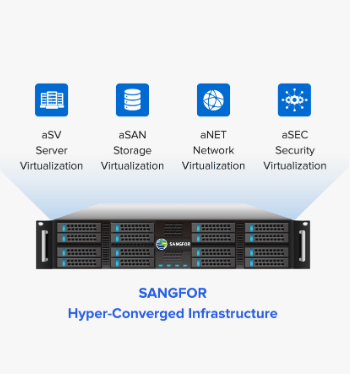
At the foundation sits the Virtualization Software layer, Sangfor aSV, which supports VM migration from VMware environments with documented operational continuity. It means organizations that have built their operations on VMware can migrate workloads without forced re-architecture, reducing the risk window during the transition.
Sangfor HCI (broader hyperconverged infrastructure platform) and Sangfor Cloud Platform, on the other hand, extend that foundation into a fully managed private cloud platform capable of unified cloud infrastructure management across distributed environments. The Sangfor Cloud Platform is built on HCI and supports hybrid cloud architecture, enabling workload portability between on-premises and public cloud environments rather than simple connectivity between them.
How does Sangfor ensure AI-readiness?
Third, the AI-readiness component is where Sangfor’s positioning has become more consequential in recent evaluations. The platform supports GPU resource pooling and AI workload scheduling, which matters for organizations that are building an AI strategy on private or hybrid infrastructure rather than defaulting entirely to public cloud for AI workloads. This is a real architectural consideration. Running AI inference at scale on public cloud has cost implications that many finance teams are now scrutinizing closely.
Viable Sangfor Server Virtualization Software Application
The Institute of Business Administration (IBA) in Karachi, Pakistan, illustrates this practically. Already running Sangfor HCI’s Server Virtualization Software for core IT operations, IBA extended its Sangfor deployment to build a high-performance computing environment for PhD-level AI research and data-intensive coursework.
The infrastructure, which included GPU acceleration via an NVIDIA A40S integrated into the Sangfor HCI framework, provided researchers with AI model training and simulation capabilities without requiring a separate HPC stack.
According to IBA’s Associate Registrar ICT, Sangfor’s deployment enabled the institution to support advanced AI-based courses while maintaining a stable, manageable infrastructure, a testament to the platform’s ability to run AI workloads within a unified environment.
Recognition that makes Sangfor Trustworthy!
Independent peer reviews reinforce this at scale. Sangfor HCI holds a 4.9/5 rating on G2, where it has been recognized as a Leader in the G2 Summer 2026 Reports across Hyperconverged Infrastructure, Server Virtualization, and Disaster Recovery categories. The Leader designation on G2 is determined by verified customer satisfaction scores and market presence, not by vendor self-reporting.
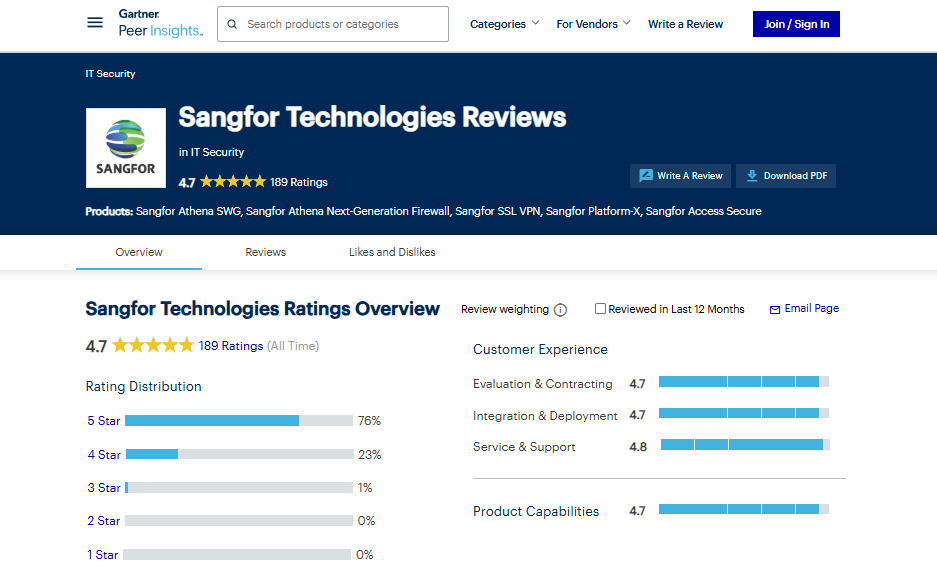
Sangfor has also earned a 4.7/5 rating on Garnet Peer Insights, backed by plaudits from industry experts and users for its continuous innovation, excellent support, and seamless product integration.
Is Sangfor a viable VMware alternative for enterprise environments?
Yes, Sangfor is undoubtedly a viable alternative to VMware. Its Cloud Platform provides HCI, server virtualization, private cloud, and hybrid cloud capabilities with documented VMware migration pathways. Additionally, it is suited to organizations seeking operational continuity during transition, along with a platform roadmap that includes AI-enabled cloud infrastructure, hybrid cloud architecture, and consolidated management across the full infrastructure stack.
Migration Considerations and Operational Risk
Platform migrations carry a risk that is rarely proportional to the new platform’s complexity. Most of it lives in the dependencies, i.e., the workloads that behave unexpectedly once moved, the integrations nobody fully documented, or the monitoring gaps that appear mid-transition.
It means that any organization planning a migration from VMware or a legacy private cloud environment should front-load the dependency mapping work before evaluating vendor migration tooling.
The reason behind this is simple: understanding what you’re moving is more important than knowing how fast a vendor can move it. The migration timeline matters, but not more than knowing that the workload inventory is accurate.
Furthermore, vendors with structured migration methodologies and documented support continuity during transition reduce operational risk measurably compared to self-directed migrations from community-supported platforms. That support structure is worth evaluating explicitly during vendor selection. So, the question to ask here is not ‘can you help us migrate?’ but ‘what does your team do when something breaks at 2 AM during migration week?’
Enterprise-Grade Is a Moving Standard, and 2026 Just Raised It
The platforms that define enterprise cloud infrastructure now are not defined by any single capability. They are defined by coherence: the ability to run what exists today without disruption, scale with workload growth but without architectural rework, support private and hybrid cloud architectures without creating portability traps, and accommodate AI-driven workloads without requiring a separate infrastructure investment.
That is a more demanding brief than it was two years ago. The organizations conducting platform reviews right now, whether triggered by VMware licensing changes or by AI strategy requirements, are discovering that the evaluation criteria have shifted. The platforms worth serious consideration are those that have kept pace with that shift, and interestingly, not all of them have.
FAQs
1. What defines an enterprise-grade cloud infrastructure platform?
An enterprise-grade cloud infrastructure platform like Sangfor combines virtualization, compute, storage, networking, security, cloud management, and AI-ready capabilities within a scalable architecture designed for business-critical workloads.
2. What should organizations evaluate when selecting a cloud infrastructure platform?
When choosing a private cloud platform, organizations should evaluate workload versatility, hybrid cloud portability, AI readiness at the compute layer, operational continuity during migration, management plane consolidation, and vendor roadmap transparency. A strong cloud platform must support existing workloads without forced redesign while enabling a credible path toward containerized and AI-enabled infrastructure.
3. What does AI-enabled cloud infrastructure mean for enterprise IT?
For enterprise IT, AI-enabled cloud infrastructure means platforms that will integrate GPU resource pooling, AI workload scheduling, and inference pipeline support natively within the cloud architecture. The aim here is to run AI workload alongside traditional virtualized applications on the same infrastructure without creating separate, purpose-built AI stacks.
4. What is the difference between a private cloud platform and a hybrid cloud platform?
The major difference between a private and a hybrid cloud platform is that the former operates completely within an organization’s own infrastructure, offering control and data sovereignty, while the latter extends that environment to include public cloud resources, enabling workload portability across both. Now, in enterprise cloud architecture, that distinction matters for compliance requirements, latency-sensitive applications, and cost management across diverse workload types.
5. What are the key risks when migrating enterprise workloads to a new cloud infrastructure platform?
The primary risks of migrating enterprise workload to a new cloud infrastructure include workload dependency mismatches, unplanned downtime, incomplete migration tooling, and gaps in management continuity post-migration. It means companies must prioritize vendors with structured migration methodologies, live migration capability, and dedicated support during the transition period.